A Forex Course on the CLS Strategy: Model 1 vs 2
What a Real Forex Course Should Teach You
Many people looking for a forex course are sold on the idea of complex indicators or secret formulas. In reality, the best trading education focuses on teaching a clear, repeatable process for reading market behavior. The CLS strategy, as demonstrated in a recent XAUUSD analysis by David Perk, is a prime example of such a process-driven methodology.
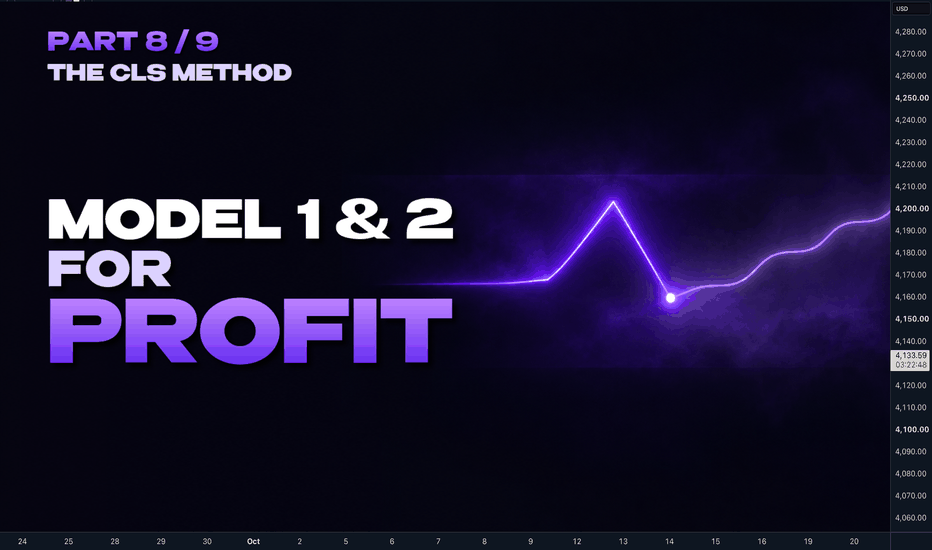
The analysis, titled “CLS Method 8/9,” dissects a common market scenario into two distinct, manageable parts: 'Model 1' (the reaction) and 'Model 2' (the expansion). This isn't just a trading setup; it's a snippet from a complete curriculum designed to build a professional trader's mindset. Let's explore what this single idea reveals about the depth of the CLS strategy.
This kind of detailed, sequential logic is what separates a comprehensive trading course from a simple collection of tips and tricks.
Dissecting the CLS Strategy on the XAUUSD Chart
At its core, the CLS strategy is about understanding liquidity and market structure. The 'Model 1' vs. 'Model 2' concept is an execution model that sits on top of this foundational analysis. Here’s how the method would have read the chart from the TradingView idea.
The Foundation: Bias and Structure
Before any model is considered, the CLS strategy demands two things:
- Higher-Timeframe (HTF) Bias: The trader must first determine the market's overall intended direction from the daily and 4-hour charts. For a bullish trade, the HTF trend must be up. This acts as the primary filter.
- The CLS Range: This is a clearly defined area of consolidation where both buy-side and sell-side liquidity are building up. The high and low of this range are the critical levels to watch.
The Event: Manipulation
The strategy anticipates that the market will often make a false move to hunt for liquidity before its real move. In a bullish scenario, this means price will temporarily push below the low of the CLS range, triggering sell-stops and tricking breakout traders into shorting.
The Trigger: The Confirmation Close
This is where the CLS strategy truly diverges from amateur approaches. The strategy does not try to catch the falling knife or predict the exact bottom of the manipulation. Instead, it waits patiently for confirmation that the manipulation has failed. This confirmation is a candle closing back inside the previously defined CLS range. As David puts it, this close is the “door” to the trade.
The Execution: A Tale of Two Models
This is the core lesson you'd find in a high-quality forex course. The close does not signal two trades; it signals one.
- Model 1 (The Reaction): This is the high-probability trade. It's based on the confirmation that the move below the range was false. The trade enters after the confirming close, with a stop-loss below the manipulation low and a target at the range high. It is a simple, contained trade based on a reaction.
- Model 2 (The Expansion): This is a separate, conditional, and lower-probability trade. It can only be considered if Model 1 is successful and price then shows strong signs of breaking out of the range high. The critical mistake, and what the CLS strategy protects against, is assuming this will happen.
This methodical breakdown of market behavior into distinct, actionable stages is the hallmark of a professional trading education. To get a feel for these foundational concepts, the Free CLS mini course is an excellent starting point.
FAQ
H3: What makes a good forex course?
A good forex course teaches a complete, coherent trading strategy from start to finish. It should cover market analysis, risk management, execution, and psychology. Look for courses created by traders with a verifiable track record, as this proves the strategy works in live markets.
H3: Can I learn the CLS strategy without the course?
You can learn elements of the CLS strategy from free content, but the full, nuanced system is taught within the CLS Academy. A structured trading course ensures you learn all the components in the correct order and understand how they connect, which is difficult to achieve on your own.
H3: Is it better to learn one strategy or many?
For most traders, especially those starting out, it is far better to master one comprehensive strategy, like the CLS Method, than to know a little about many. Mastery of a single, proven system leads to consistency; dabbling in many leads to confusion and conflicting signals.
Learn this with live trading signals
This is the same process David uses when he publishes trading signals in the CLS Lab membership. By joining, you not only get access to high-probability trade ideas but also join a trading community where you can see this analysis applied in real-time during live streams. Your first 5 days are free.
https://whop.com/joined/david-perk-fx/products/cls-lab-membership/
WRITTEN BY
David Perk
Full-time forex trader and mentor. $1M+ verified track record on FX Blue. Publishes CLS trading signals and teaches the process live inside the membership.
Learn more in the membership — trading signals included
Join the trading community for live CLS signals, one weekly membership stream, and the same setups you just read. First 5 days free, full access.
Start 5 days free — signals + membershipNo experience needed. Cancel anytime.