USOIL CLS Strategy: A Bearish Model 1 Setup Breakdown
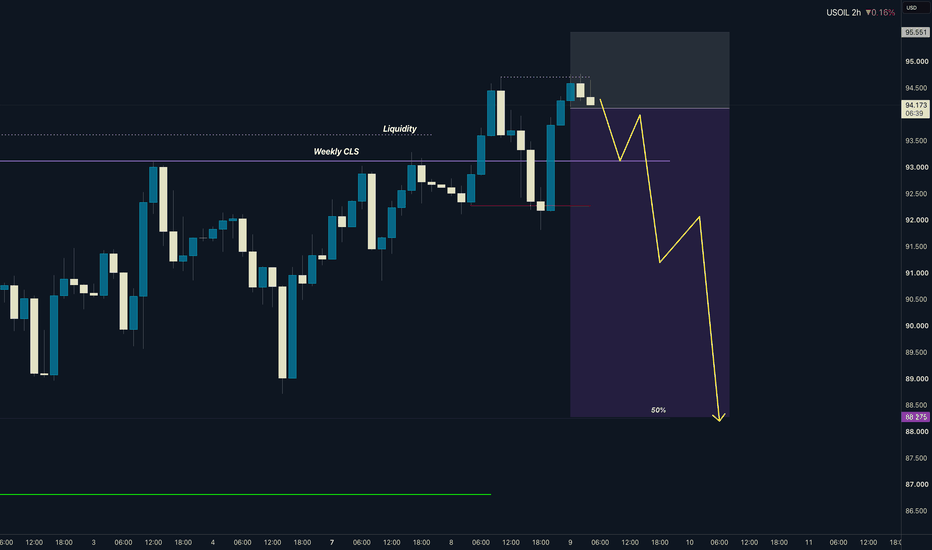
Anatomy of a High-Probability Trade
In the world of forex and commodities trading, clarity is king. A recent chart analysis by our head trader, David Perk, on USOIL provides a perfect example of a clear, structured trade setup using his proprietary CLS strategy. This wasn't a random guess; it was a methodical breakdown of a potential bearish opportunity based on a specific sequence of market events.
Let's dissect this Model 1 short setup to understand the logic that professional traders use. This kind of in-depth analysis is a cornerstone of the forex education we provide, moving traders from inconsistent results to a process-driven approach.
Deconstructing the USOIL Chart
The setup began with the identification of a new "CLS Range" on the 2-hour chart. This is the first and most crucial phase: Consolidation.
The CLS Range and Key Level
A CLS Range represents a period of equilibrium where price is consolidating, building up orders, and creating liquidity above and below its boundaries. In this USOIL example, a new range had formed, setting the stage for the next phase. David also highlighted a "Key Level," a significant price point where a reaction was anticipated. These levels are not arbitrary; they are derived from market structure and often act as magnets for price.
The Manipulation Phase
The most compelling part of the setup is the manipulation. As David noted, the plan was to wait for price to manipulate into the Key Level. This move is designed to trick market participants. It pushes price to an extreme to trigger stop losses and entice breakout traders to enter in the wrong direction. By waiting for this event, we aren't predicting; we are waiting for the market to reveal its intention to hunt liquidity.
The Logic Behind a CLS Model 1 Short
Why is this manipulation so important? Because it creates the fuel for the subsequent move. Once liquidity has been taken, the market is often ready to reverse course and head in the opposite direction. However, a skilled trader never enters on the manipulation itself.
Confirmation is Non-Negotiable: The CIOD
This is where discipline separates the pros from the amateurs. David emphasized the need to see a "CIOD" — a Change in Order Flow. This is the confirmation signal that the manipulation phase is over and the expansion phase is beginning. A CIOD is a clear structural shift that shows sellers are now in control. As David stated, the entry should only be considered after a candle closes, confirming this shift in momentum. This rule prevents traders from getting caught by a volatile wick.
A Clear and Objective Target
Finally, the trade plan included a pre-defined target: 50% of the CLS range. This is not a randomly chosen number. It's a logical area for price to gravitate towards within the established range, offering a solid risk-to-reward profile. Having a clear target removes greed and emotion from the exit decision.
This entire process—from identifying the range to waiting for confirmation and aiming for a logical target—is a repeatable system. It's this level of detail and structure that we instill in students at our trading academy, helping them learn forex trading with a professional framework.
WRITTEN BY
David Perk
Full-time forex trader and mentor. $1M+ verified track record on FX Blue. Teaches the CLS strategy to funded traders — live, five times a week.
Want to trade this alongside David?
Join the community — livestreams 5× a week, trade breakdowns, and entries called in real time. Your first week is free, full access to every paid feature.
Join the community — first week freeNo experience needed. Cancel anytime.