Analyzing a USDJPY Short Setup with the CLS Strategy
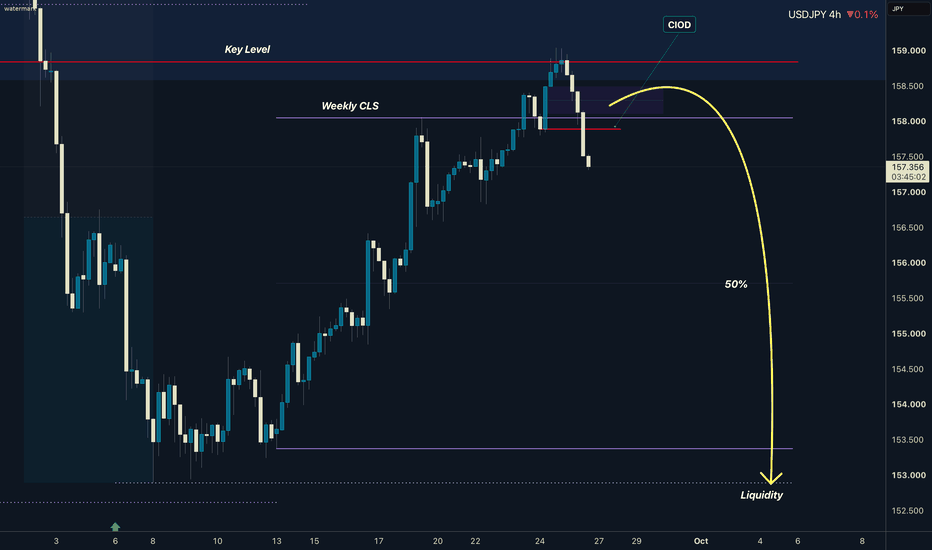
Unpacking a Professional USDJPY Trade Idea
At David Perk FX, we believe in transparency and education. A core part of our process involves analyzing the market using a consistent, rule-based framework. In this post, we'll break down a recent TradingView idea for a potential short trade on USDJPY, illustrating how our proprietary CLS (Contango-Liquidation-Saturation) strategy is applied.
The idea, titled "USDJPY Weekly CLS Model 1," presents a bearish case based on specific price action on the 4-hour chart. The goal isn't just to find a trade but to wait for a high-probability scenario to unfold according to a predefined plan. Let's dissect the components.
Identifying the CLS Range
The first element noted in the analysis is the creation of a "New CLS Range." In simple terms, a range is a period of consolidation where price moves between a relatively clear high and low. For a CLS trader, this range is more than just a sideways market; it's an area where order flow is accumulating, setting the stage for the next significant price move. Identifying this range is the foundational step, as it provides the context for everything that follows.
On the USDJPY chart, this range represents a temporary equilibrium. The boundaries of this range become critical reference points for the next phase of the setup.
The Manipulation Phase and Key Levels
Here's where the CLS strategy begins to diverge from standard range-trading methods. The analysis states, "after the manipulation in to the Key Level, below the CLS range..." This is a crucial concept. Instead of trading a simple breakout, the CLS strategy anticipates a false breakout—a move designed to trap traders and engineer liquidity.
In this USDJPY example, the price is expected to push above the established range high, into a "Key Level." This move, which David calls "manipulation," looks bullish to the untrained eye. However, for a CLS trader, it's a signal that large players may be taking the opposite side of the breakout, absorbing buy orders to fuel a move in the opposite direction. The trade is not taken during this phase; this is a time for observation.
The Trigger: Waiting for a Change in Orderflow (CIOD)
A potential setup is worthless without a clear confirmation signal. The idea is explicit: "we need to see a confirmation switch from the manipulation phase - CIOD (change in order flow) in the the expansion."
CIOD is the trigger. After price manipulates the highs, we don't automatically short the market. Instead, we must wait patiently for price to show us that sellers are now in control. This "change in orderflow" is typically identified by a specific bearish candlestick pattern or a break of a recent micro-low formed during the manipulation phase. It’s the market’s way of confirming that the bullish move was indeed false and that the path of least resistance is now to the downside.
The note, "enter only after candle close," reinforces this principle of patience. Confirmation isn't a guess; it's a tangible event on the chart.
Defining the Exit: A Logical Target
Every trade needs a clear exit plan. For this setup, the target is simple and logical: "50% of the CLS range." This level, often called the equilibrium (EQ), is a natural magnet for price following a rejection from one of the range's extremes. It provides a high-probability target that avoids greed and focuses on capturing the most reliable portion of the expected move.
This entire process—from identifying a range to patiently waiting for manipulation and confirmation—is a hallmark of professional trading. It moves beyond simple patterns and incorporates a deeper understanding of market dynamics, something we focus on heavily in our forex education and trading academy.
WRITTEN BY
David Perk
Full-time forex trader and mentor. $1M+ verified track record on FX Blue. Teaches the CLS strategy to funded traders — live, five times a week.
Want to trade this alongside David?
Join the community — livestreams 5× a week, trade breakdowns, and entries called in real time. Your first week is free, full access to every paid feature.
Join the community — first week freeNo experience needed. Cancel anytime.