The Real Edge in Trading USDCAD: A Masterclass in Risk Control
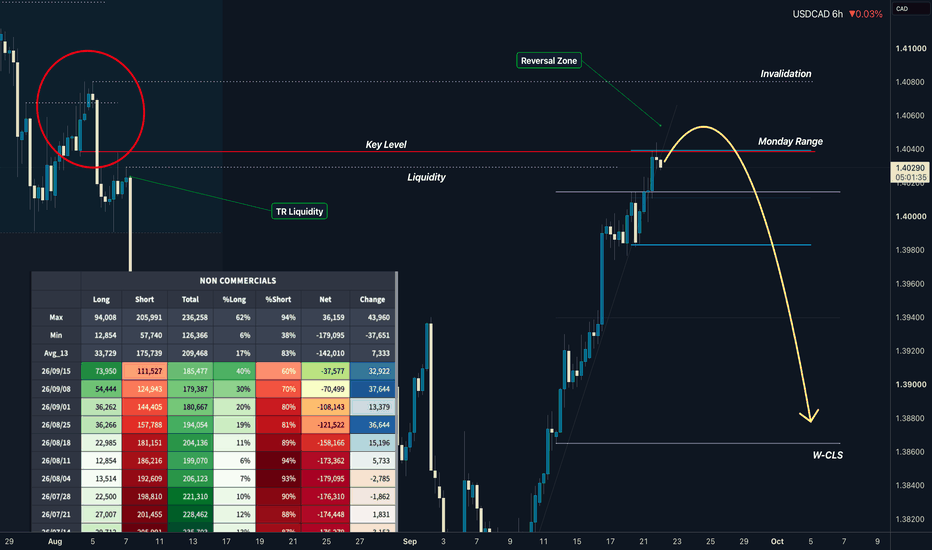
The Unseen Foundation of Every Good Trade
When looking at a trade idea, like the recent short setup on USDCAD, most people's eyes are drawn to the exciting parts: the entry and the potential target. They focus on what they could gain. But the author, David Perk, deliberately included a section that many would skip over, yet it contains the most important lesson: risk control.
Statements like "Risk Control is Key to Long Term Success" and "Protect Capital First" aren't just generic disclaimers. They are the bedrock of a professional trading career. Let's break down how a professional would apply risk control to this specific USDCAD idea.
The Logic of the Stop Loss
The strategy for this trade was to wait for price to manipulate a weekly high and then show a confirmation of reversal (a CIOD). This structure provides an incredibly logical place for a stop loss.
- Placement: The stop loss would be placed just above the highest point of the manipulation.
- The 'Why': This isn't an arbitrary level. The entire trade thesis is that this high represents the peak of the 'false move'. If the market breaks above this level with conviction, the foundational reason for the trade is proven wrong. The sellers who were supposed to take control have failed. Placing the stop loss here means you are exiting the moment your idea is invalidated, not a moment later.
This logical placement is a core tenet of sound forex education. Your stop loss isn't just a pain point; it's a tool for invalidating a hypothesis.
Position Sizing: The Real Risk Manager
A tight stop loss is useless if your position size is too large. Professional traders don't think in pips; they think in percentages of their capital. Before entering the USDCAD trade, a pro would perform a simple calculation:
- Determine Risk per Trade: Decide on a fixed percentage of your account to risk (e.g., 1%).
- Measure Stop Distance: Calculate the number of pips between your entry price and your stop loss.
- Calculate Position Size: Use a position size calculator to determine the exact lot size that makes that pip distance equal to your chosen risk percentage (1% of your account).
This ensures that whether the stop is 20 pips away or 100 pips away, the dollar amount you lose is always the same, controlled, and survivable. This discipline, often instilled by a forex mentor, is what keeps you in the game long enough to be profitable.
The Edge is in the Asymmetry
The true 'edge' in trading isn't about winning every trade. It's about ensuring your wins are meaningfully larger than your losses. In the USDCAD setup, the risk was the distance to the high, while the reward was the distance to the target at the 50% level of the range.
A professional only takes trades where this risk-to-reward ratio is favorable (e.g., 1:2, 1:3, or better). This means for every dollar you risk, you stand to make two or three. By combining a high-probability setup with this positive asymmetry, you can be profitable even if you only win 50% of your trades.
Ultimately, the setup on the chart was just the opportunity. The real skill—the true professional edge—lies in the disciplined management of risk around that opportunity.
WRITTEN BY
David Perk
Full-time forex trader and mentor. $1M+ verified track record on FX Blue. Teaches the CLS strategy to funded traders — live, five times a week.
Want to trade this alongside David?
Join the community — livestreams 5× a week, trade breakdowns, and entries called in real time. Your first week is free, full access to every paid feature.
Join the community — first week freeNo experience needed. Cancel anytime.