Understanding Market Structure: A GBPUSD CLS Guide
The Foundation of Forex Education: Market Structure
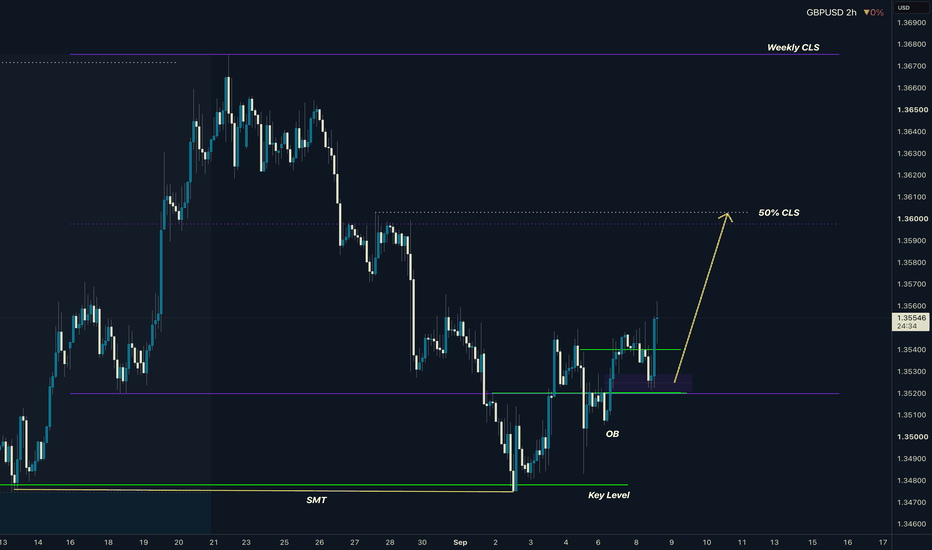
For anyone starting to learn forex trading, the sheer volume of information can be overwhelming. Indicators, news events, and conflicting advice create a confusing landscape. However, the path to clarity begins with one core principle: understanding market structure. A recent analysis on GBPUSD provides a perfect real-world example of how to read the market's story using a systematic approach like the CLS strategy.
Instead of just looking for random buy or sell signals, a proper forex education teaches you to identify the phases the market moves in. This allows you to anticipate, rather than just react.
Deconstructing the CLS Strategy on GBPUSD
CLS stands for Consolidation, Liquidity, and Structure. It's not an indicator, but a framework for interpreting price action. Let's break down the phases as seen in the GBPUSD setup.
Phase 1: Consolidation and the CLS Range
First, price moves sideways, creating a defined high and low. This is the "Consolidation" phase, which establishes a "CLS Range." This range is critical because it builds up orders (liquidity) above its highs and below its lows. For a beginner, the first step is learning to spot these ranges on a chart. It’s the calm before the market makes its next significant move.
Phase 2: Manipulation Below a Key Level
This is where many new traders get caught. In the GBPUSD example, the expectation is for price to dip below the established CLS range. This move is described as "manipulation." It's designed to trigger the stop losses of traders who went long inside the range and to lure in sellers who believe the price is breaking down. A key part of your forex education is learning that these moves are often traps, not genuine breakouts. The goal is to grab liquidity, not start a new trend in that direction.
Phase 3: Confirmation and Expansion
The final piece of the puzzle is waiting for confirmation that the manipulation is over. The analysis mentions waiting for a "CIOD" (Change in Order Flow). This is your signal that the market has taken the liquidity it needed and is now ready to move in the intended direction—in this case, up. This "Expansion" phase is the actual tradeable move. The advice to "enter only after candle close" is crucial; it forces you to wait for the market to prove your thesis is correct, preventing impulsive entries.
The Patient Path to Learning Forex
This single GBPUSD idea encapsulates the core tenets of a solid trading methodology. It’s not about getting rich quick; it’s about process and patience.
- Understand the Logic: Don't take a trade unless you understand the 'why' behind it. Why was that the consolidation range? Why was that a manipulation move?
- Wait for Confirmation: The difference between a novice and a professional is often the ability to wait for the market to confirm their bias.
- Control Your Risk: As the analysis emphasizes, protecting your capital is paramount. A great strategy is useless without disciplined risk management.
To truly learn forex trading, focus on mastering one concept at a time. By dissecting setups like this, you build a deep, practical understanding of market behavior that will serve you far better than any 'magic' indicator.
WRITTEN BY
David Perk
Full-time forex trader and mentor. $1M+ verified track record on FX Blue. Teaches the CLS strategy to funded traders — live, five times a week.
Want to trade this alongside David?
Join the community — livestreams 5× a week, trade breakdowns, and entries called in real time. Your first week is free, full access to every paid feature.
Join the community — first week freeNo experience needed. Cancel anytime.