Your Path to Understanding Market Structure Like a Pro
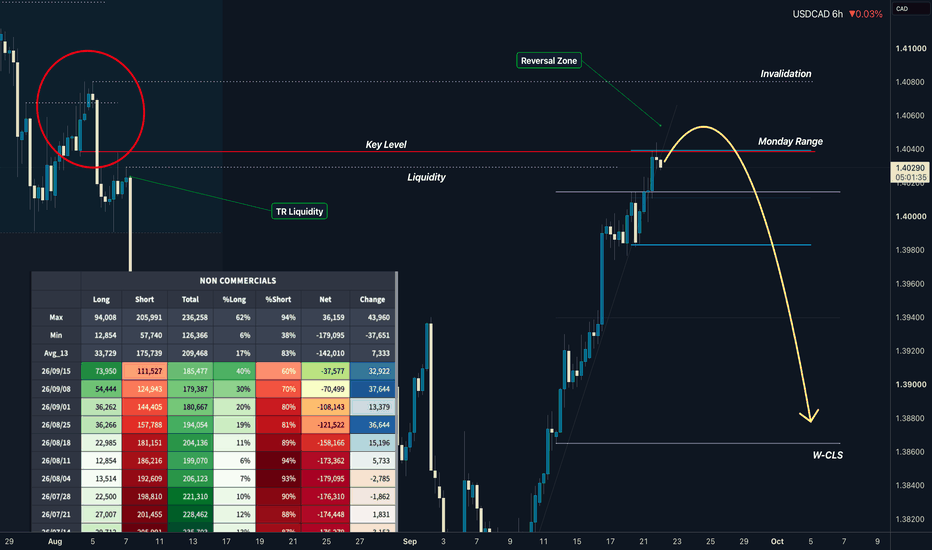
From Squiggly Lines to Actionable Insights
To a beginner, a forex chart can look like a random, chaotic series of lines. To a professional, it's a story of buying and selling pressure, of institutional intent, and of repeating patterns. A recent USDCAD idea illustrates this difference perfectly. It wasn't about a simple indicator; it was a deep reading of market structure.
For anyone looking to learn forex trading, understanding how to read structure is the most critical skill you can develop. This USDCAD example provides a roadmap. Here's how a beginner should approach their forex education to gain this level of understanding.
Stage 1: The Absolute Basics of Structure
Before you can understand manipulation, you must understand the basics. This is the foundation upon which everything else is built.
- Support and Resistance: These are not just lines, but zones where the market has previously pivoted. The "Weekly Short Zone" in the USDCAD idea is a prime example of a major resistance area.
- Market Trends: Is the market making Higher Highs and Higher Lows (an uptrend)? Or Lower Lows and Lower Highs (a downtrend)? This basic understanding tells you the current flow of the market.
Many beginners make the mistake of skipping this step and jumping straight to complex strategies. A solid trading course will always start here.
Stage 2: Advancing to Institutional Concepts
Once you can identify basic structure, the next step is to understand why that structure sometimes breaks in unexpected ways. This is where institutional concepts come in.
- Ranges and Equilibrium: As seen with the "CLS Range" in the USDCAD idea, markets often consolidate in an area of fair value. Understanding these ranges helps you define a 'home base' for price.
- Liquidity and Manipulation: This is the key insight from the trade idea. The push above the range into the weekly zone was described as "manipulation." Professionals understand that markets are engineered to move to areas where stop-loss orders are clustered (liquidity). This 'stop hunt' often precedes the real, intended move. Learning to spot this separates you from the retail herd.
Stage 3: Developing a Repeatable Process (Strategy)
Knowledge is useless without a system for applying it. The final stage is to assemble these concepts into a concrete trading plan. The USDCAD idea wasn't a random observation; it was a "CLS Model 1 trade setup."
This implies a clear, repeatable sequence:
- Context: Is price at a significant higher timeframe level?
- Manipulation: Has price manipulated a key level to hunt liquidity?
- Confirmation: Has the market structure shifted to confirm a reversal (the "CIOD")?
- Execution: Do I have a clear entry, stop, and target based on this structure?
This systematic approach is what a comprehensive forex academy provides. It takes you beyond isolated concepts and gives you a complete framework for making trading decisions. It's the difference between collecting random puzzle pieces and being handed the box with the full picture on it.
WRITTEN BY
David Perk
Full-time forex trader and mentor. $1M+ verified track record on FX Blue. Teaches the CLS strategy to funded traders — live, five times a week.
Want to trade this alongside David?
Join the community — livestreams 5× a week, trade breakdowns, and entries called in real time. Your first week is free, full access to every paid feature.
Join the community — first week freeNo experience needed. Cancel anytime.