How to Trade with Live Trading Signals
Beyond the Alert: Using Live Trading Signals Effectively
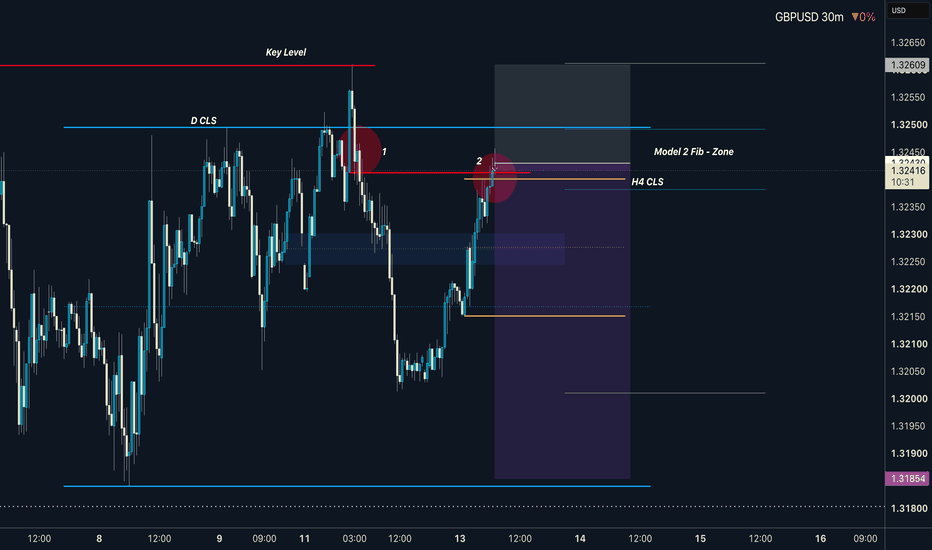
Many aspiring traders think that live trading signals are a magic bullet—a simple "buy" or "sell" alert that prints money. The reality is that professional signals are tools for learning and execution, not just commands. How you use them is what truly matters. Using a recent GBPUSD short setup identified by David Perk, let's walk through the step-by-step process that CLS Lab members follow to turn an idea into a high-probability trade.
This approach transforms a passive signal into an active learning experience, which is the ultimate goal of a high-quality trading signals membership. It’s about building your own skills, not just following alerts blindly.
Step 1: Receive and Understand the Analysis
The first step begins when the signal is posted. In our trading community, this isn't just an alert; it's a complete analytical package. For the GBPUSD idea, members received:
- The Chart: A clear visual of the GBPUSD price action.
- The Strategy: An explanation that this is a CLS Model 1 setup.
- The Context: The reasoning behind the idea—a new CLS range has formed, and we're watching for a manipulation and reaction.
- The Condition: The specific trigger to watch for—the CIOD (Change in Order Flow).
This initial post sets the stage. You now know what pair to watch, what you are looking for, and why. This is a world away from vague forex signals that leave you guessing.
Step 2: Stalk the Entry with Patience
This is where most novice traders fail. They see the analysis and want to jump in immediately. However, David's guidance on the GBPUSD setup was explicit: "Stay patient and enter only after candle close."
Following live trading signals professionally means becoming a patient hunter. You have the map (the analysis), and now you are waiting for the target to appear in the crosshairs. For this trade, the process was:
- Watch the manipulation: Observe price dipping below the CLS range into the key level.
- Look for the reaction: See if price rejects the lower prices and starts to push back.
- Identify the CIOD: Wait for price to break the structure that confirms the order flow has shifted.
This waiting period is an active, not passive, process. It's where you develop the discipline that separates amateurs from pros. This is a core part of what we teach in our effort to help members learn forex trading deeply.
Step 3: Execute Based on a Rule
Once the CIOD occurs and a candle closes, confirming the structural shift, the condition for entry is met. The execution is no longer an emotional decision; it's a logical response to a predefined rule.
The signal has done its job: it guided you to a specific point on the chart where the probability is now in your favor. Your job is to execute the plan.
This rule-based execution also includes risk management. A stop loss would be placed based on the CLS strategy rules, and the take profit is already defined at the 50% mark of the larger CLS range. The entire trade is systematic.
This structured approach is a cornerstone of effective forex mentorship. It turns the chaotic market into a series of if-then scenarios. If you're looking for a foundational understanding of these concepts, the Free CLS mini course is an excellent place to start.
FAQ
Are live trading signals profitable?
Live trading signals can be profitable if they are from a reputable source with a proven strategy and if you use them correctly. Profitability comes from following the associated rules, managing risk, and using the signals to learn a process, not just blindly copy trades.
What is a trading signal?
A trading signal is a trade idea or trigger that suggests a specific action, such as buying or selling a financial instrument. A high-quality signal includes the analysis behind the idea, the entry condition, potential targets, and the underlying strategy, empowering the trader.
How fast do I need to act on live trading signals?
It depends on the signal type. Some are instant execution, but professional signals, like the CLS examples, often provide a setup to watch. Your job is not to be fast but to be patient and act only when the specific conditions, like a CIOD, are met.
Learn this with live trading signals
This is the same analytical process David Perk uses when he publishes trading signals for members of the CLS Lab. Inside, you get access to these ideas, live streams explaining the charts in real-time, and a supportive trading community. If you want to see how this strategy is applied to live markets, you can join us today. The first 5 days are free.
WRITTEN BY
David Perk
Full-time forex trader and mentor. $1M+ verified track record on FX Blue. Publishes CLS trading signals and teaches the process live inside the membership.
Learn more in the membership — trading signals included
Join the trading community for live CLS signals, daily streams, and the same setups you just read. First 5 days free, full access.
Start 5 days free — signals + membershipNo experience needed. Cancel anytime.