How to Trade a Range Reversal on USDCAD: A Step-by-Step Guide
A Practical Blueprint for Trading Reversals
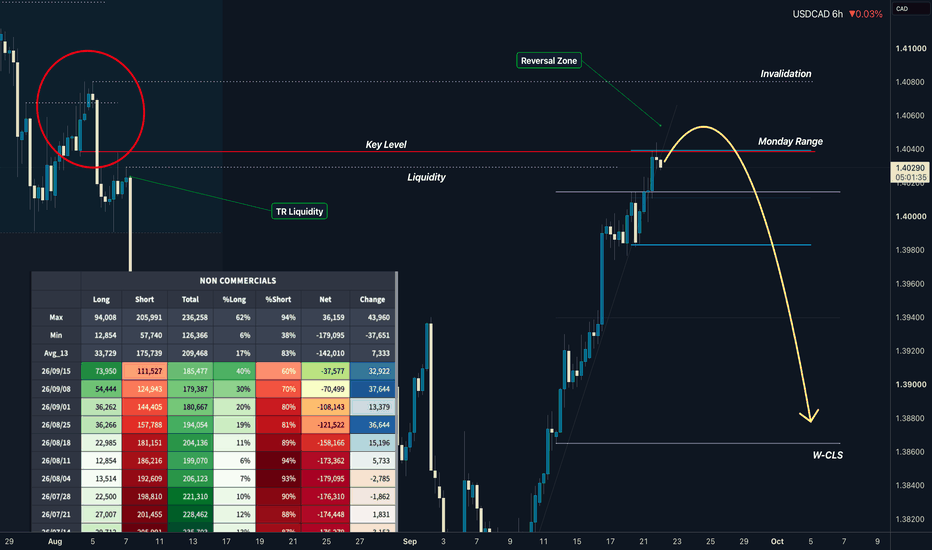
Many aspiring traders are drawn to the excitement of catching market reversals, but they often lack a systematic process. A recent USDCAD idea published on TradingView offers a clear, step-by-step blueprint for approaching such a trade. Instead of just guessing a top, this method relies on structure, confirmation, and clear parameters. Here’s how you could apply this logic to your own trading.
Step 1: Identify the Higher Timeframe Point of Interest
Before even thinking about an entry, you must understand the broader market context. In the USDCAD example, the entire trade was anchored to a "Weekly Short Zone." This is a significant area of supply where selling pressure is expected.
- Actionable Step: Zoom out on your charts (to the Daily or Weekly) and identify major historical support and resistance zones. These are the arenas where you want to look for potential battles between buyers and sellers.
Step 2: Define the Current Operating Range
The analysis identified a "CLS Range." This is the more immediate area of consolidation that price has been respecting. The reversal idea is based on price first leaving this range in a false move, and then returning to it.
- Actionable Step: On a lower timeframe (like the 4-hour or 6-hour), draw a box around the recent consolidation. This defines your immediate battleground and potential target area.
Step 3: Wait for a Confirmed Manipulation
This is where patience becomes a trader's greatest asset. The USDCAD idea wasn't to short as soon as price touched the weekly zone. The plan was to let the market push into and through that level—a move designed to trap eager buyers and stop out early sellers. This is the manipulation phase.
- Actionable Step: Don't enter just because price hits your level. Watch for it to overshoot the level and then fail to continue higher. This 'false breakout' is the key ingredient.
Step 4: Seek a Confirmation of Reversal (CIOD)
Once the manipulation occurs, you need a signal that sellers are taking control. The idea refers to this as a "CIOD" or "Change in Order Flow." This is typically a break of short-term market structure on a lower timeframe. For example, if the price was making higher highs and higher lows on its way up, a CIOD would be the first definitive lower low.
- Actionable Step: Drop to a lower timeframe (e.g., 15-minute or 1-hour). Wait for the bullish structure to break. As the idea stated, you should "enter only after candle close" to confirm the break, avoiding fake-outs.
Step 5: Define Your Entry, Stop, and Target
With confirmation, you can now execute the trade with a clear plan.
- Entry: Enter on the close of the candle that confirms the CIOD.
- Stop Loss: Place your stop loss above the absolute high of the manipulation move. If the price goes back there, your trade idea is invalidated.
- Target: The idea specified the "50% of the CLS range" as the target. This provides a logical take-profit level based on market structure, ensuring you secure profits systematically.
Following a structured process like this is fundamental to success. It's a core concept taught in any quality forex education program, transforming trading from a gamble into a disciplined skill.
WRITTEN BY
David Perk
Full-time forex trader and mentor. $1M+ verified track record on FX Blue. Teaches the CLS strategy to funded traders — live, five times a week.
Want to trade this alongside David?
Join the community — livestreams 5× a week, trade breakdowns, and entries called in real time. Your first week is free, full access to every paid feature.
Join the community — first week freeNo experience needed. Cancel anytime.