How to Trade EURUSD: A Step-by-Step CLS Model 1 Guide
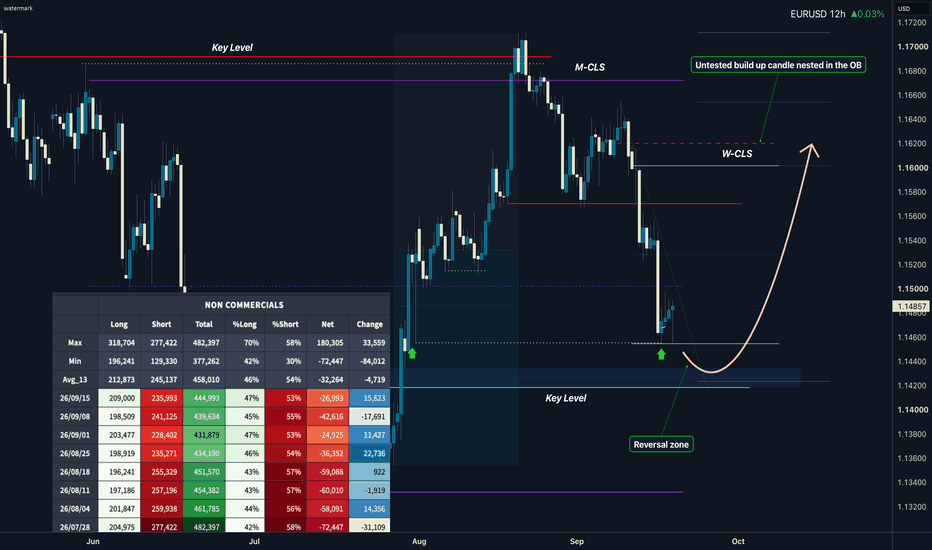
A Practical Framework for Trading EURUSD
Many aspiring traders look at a chart like EURUSD and see chaos. But with a structured approach, you can learn to see patterns and opportunities. Based on a recent analysis of a potential long setup, let's walk through the practical steps of how a trader could approach a CLS Model 1 trade.
This isn't financial advice, but rather an educational breakdown of a systematic process. Following a clear plan is what separates consistent traders from gamblers, and it's a skill essential for any funded trader. This guide will show you how to apply the principles of the CLS strategy in a real-world scenario.
Step 1: Identify the CLS Range
Before any trade can be considered, you need a clear market context. The first step is to identify a "CLS Range" on a higher timeframe, such as the 12-hour chart.
- What to look for: A period of consolidation where price is trading between a relatively clear support (low) and resistance (high).
- Action: Mark these two levels on your chart. This range is now your primary point of reference. Everything that happens outside this range is of particular interest.
Step 2: Wait Patiently for the Manipulation
One of the biggest mistakes traders make is trying to predict a breakout. In the CLS Model 1, we do the opposite: we wait for a false breakout, or manipulation.
- What to look for: Price action that breaks below the CLS range low you identified in Step 1.
- Action: Do nothing. This is the observation phase. Your job is not to trade the breakdown but to watch where it goes. This move is often designed to hunt liquidity, and entering here would mean falling into the trap. As a forex mentor, I can't stress this enough: patience during this phase is non-negotiable.
Step 3: Seek Confirmation with a CIOD
After price has dipped below the low, you're watching for signs that the manipulation is over and the true directional move is about to begin. This is where the confirmation signal comes in.
- What to look for: A CIOD (Change in Order Flow). This is a bullish reversal pattern that shows buyers are stepping in aggressively and taking control from sellers. It signals a "switch" from manipulation to expansion.
- Action: Wait for the candlestick representing the CIOD to close. A close provides much more certainty than an intra-candle spike. This confirmed signal is your potential green light to plan an entry.
Step 4: Plan Your Entry, Targets, and Stop Loss
With a confirmed CIOD, you can now structure the trade. A complete plan includes an entry, a stop loss, and targets.
- Entry: Enter a long position after the confirmation candle has closed.
- Stop Loss: Place your stop loss below the low of the manipulative move. This defines your risk. If price returns to this level, your trade idea is invalidated.
- Targets:
- Target 1: The 50% level (equilibrium) of the original CLS range. This is a logical place to take partial profits and de-risk the trade.
- Target 2: The high of the original CLS range. This would represent the completion of the full swing.
This structured approach to trade management is a core component of any effective trading course and is essential if you want to learn forex trading for long-term success.
WRITTEN BY
David Perk
Full-time forex trader and mentor. $1M+ verified track record on FX Blue. Teaches the CLS strategy to funded traders — live, five times a week.
Want to trade this alongside David?
Join the community — livestreams 5× a week, trade breakdowns, and entries called in real time. Your first week is free, full access to every paid feature.
Join the community — first week freeNo experience needed. Cancel anytime.