How to Trade a DXY Reversal with the CLS Strategy
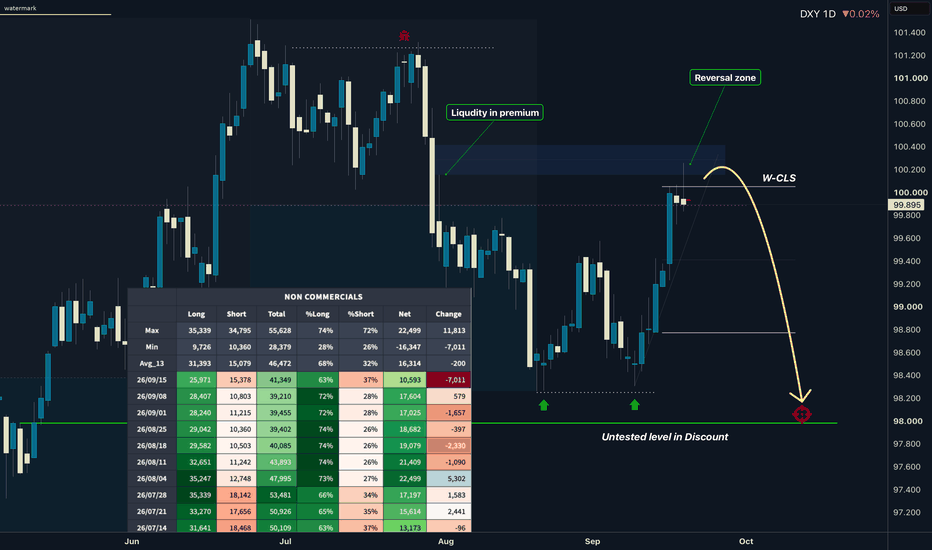
A Trader's Blueprint for a DXY Reversal
Many aspiring traders see a chart and feel overwhelmed. Where do I start? What matters most? A professional trader, however, follows a process. Using David Perk's recent analysis of the DXY as our guide, let's walk through the practical, step-by-step application of the CLS strategy for a potential reversal. This is not financial advice, but an educational look at a structured trading process that can help you learn forex trading with clarity.
Step 1: Identify the Playing Field (The CLS Range)
Before any trade can be considered, you must understand the market environment. The first step is to identify the CLS Range on a higher timeframe, like the daily chart in this DXY example. This range, defined by a recent high and low, is your map. It tells you where the market has been and provides the context for where it might go next. Everything that follows—manipulation, confirmation, and targets—is relative to this range.
Step 2: Patiently Await the Manipulation
Here is where most novice traders make a mistake. They try to trade inside the range, getting chopped up by meaningless volatility. A CLS trader does the opposite: they wait for the market to show its hand. In this "Long Model 1" setup, we are waiting for price to trade below the low of the CLS range into a key level. This is the manipulation. Your job as a trader is not to react emotionally to this drop, but to observe it patiently. As any good forex mentor will teach you, the best trades often come after the market has tricked the crowd.
Step 3: Seek Confirmation with a CIOD
After price has dipped below the range, you are now on high alert. But you do not buy yet. You are waiting for one specific event: a CIOD (Change in Order Flow). This is your trigger, the evidence that buyers are stepping in with force and overpowering the sellers who pushed the price down.
What does this look like in practice?
- Watch for a shift in candle structure: You might see a strong bullish engulfing candle or a series of higher highs and higher lows on a lower timeframe.
- Heed the rule of the close: As David emphasizes, "enter only after candle close." This simple rule prevents you from jumping in on a volatile wick that quickly reverses. Waiting for a candle to close above a certain level provides a much stronger confirmation that the order flow has truly shifted.
This confirmation step is a core principle taught in our trading course, designed to keep you out of low-probability trades and improve your strike rate.
Step 4: Plan Your Entry, Stop Loss, and Targets
With confirmation in hand, you can now execute the trade based on your plan.
- Entry: Your entry would be placed after the confirming CIOD candle has closed.
- Stop Loss: A proper stop loss is non-negotiable. It should be placed at a logical level that invalidates the trade idea, typically below the low of the manipulation move. This protects your capital.
- Targets: Your take-profit levels are pre-defined based on the CLS range identified in Step 1. The idea outlines targets at the 50% mark of the range and the top of the range. This systematic approach removes emotion from profit-taking.
By following these steps, a trader transforms a complex chart into a simple, actionable plan. This process-oriented approach is what separates amateurs from consistent traders and is a key focus for any trader aiming to become a funded trader.
WRITTEN BY
David Perk
Full-time forex trader and mentor. $1M+ verified track record on FX Blue. Teaches the CLS strategy to funded traders — live, five times a week.
Want to trade this alongside David?
Join the community — livestreams 5× a week, trade breakdowns, and entries called in real time. Your first week is free, full access to every paid feature.
Join the community — first week freeNo experience needed. Cancel anytime.