Trade Like This on USDJPY to Pass Your Funded Trader Challenge
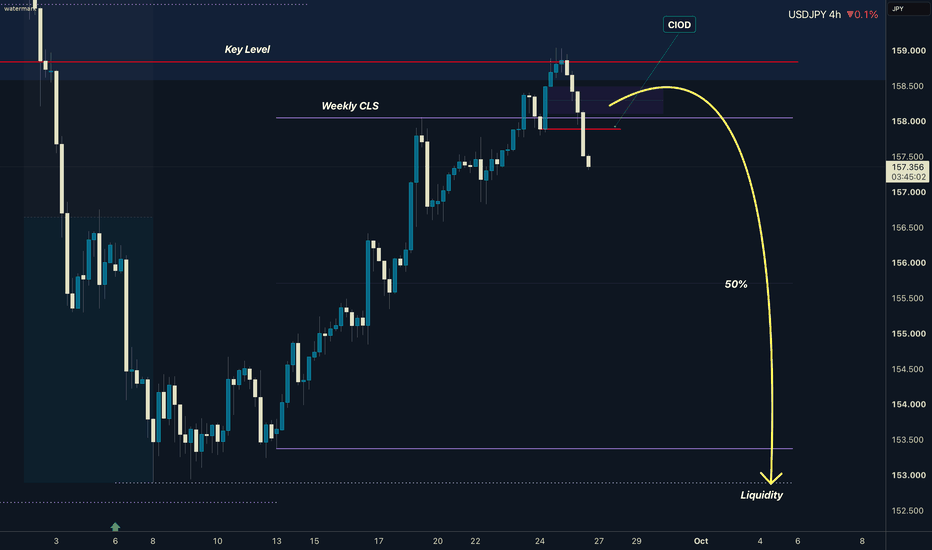
The Prop Firm Litmus Test: Process Over Profits
Passing a funded trader challenge isn't about hitting one spectacular home run. Proprietary firms are not looking for gamblers; they are looking for consistent, disciplined traders who can manage risk effectively. They want to see a repeatable process.
David Perk's recent analysis of USDJPY is a masterclass in exactly the kind of process that gets traders funded. Let's break down why this specific approach aligns perfectly with what prop firms want to see.
Element 1: A Clearly Defined, High-Probability Setup
Prop firms need to know that your success is not random. The USDJPY idea is not a vague "I think it will go down." It's a specific, named setup: a CLS Model 1.
- The Logic: The setup waits for the market to manipulate a key level (a liquidity grab) and then show signs of reversal (a Change in Order Flow). This is a high-probability scenario because it's based on the logical mechanics of the market.
- Why it Matters for Funding: When you can articulate why you are taking a trade with this level of detail, it demonstrates a professional edge. A journal entry that reads, "Entered short on USDJPY after a confirmed CIOD following manipulation above the 4H range high," is infinitely more powerful than "Sold USDJPY at resistance."
Element 2: Non-Negotiable Risk Management
This is the single most important factor for any funded trader. The provided analysis is built on a foundation of risk control.
- Pre-defined Stop Loss: The plan requires waiting for the manipulation to complete. This creates a clear invalidation point—the high of that manipulation wick. A stop loss placed above this level is logical and defines your exact risk before you even enter the trade.
- Patience as Risk Control: The rule to "stay patient and enter only after candle close" is a crucial risk management tool. It prevents you from entering prematurely and getting caught in volatility. Prop firms see this as a sign of emotional maturity and discipline.
Firms aren't just looking at your profits; they are scrutinizing your drawdown and your consistency. This risk-first approach is essential to keeping your equity curve smooth and meeting their objectives.
Element 3: An Objective and Logical Target
The trade idea specifies a clear target: "50% of the CLS range." This demonstrates a non-greedy, systematic approach to taking profits.
- The Problem with Vague Targets: Traders who say "I'll ride it as far as it goes" often fall victim to greed, watching winning trades turn into losers.
- The Benefit of a Plan: Having a logical take-profit level ensures you are banking consistent wins. It allows for the calculation of a clear risk-to-reward ratio (RR) before the trade is placed, another key metric that prop firms monitor.
Becoming a funded trader is a business. You need a business plan for every single trade. The process demonstrated in the USDJPY analysis—a defined setup, strict risk control, and a logical target—is that plan. It's the repeatable, professional process that firms are willing to back with significant capital. This is the methodology that a good trading coach will instill in you on your path to funding.
Learn this with live trading signals
This is the same process David uses when he publishes trading signals inside the CLS Lab membership. Join the trading community, follow the live signals, and sit in the streams — your first 5 days are free.
WRITTEN BY
David Perk
Full-time forex trader and mentor. $1M+ verified track record on FX Blue. Publishes CLS trading signals and teaches the process live inside the membership.
Learn more in the membership — trading signals included
Join the trading community for live CLS signals, daily streams, and the same setups you just read. First 5 days free, full access.
Start 5 days free — signals + membershipNo experience needed. Cancel anytime.