GBPUSD Trade Setup: Anatomy of a High Timeframe Reversal
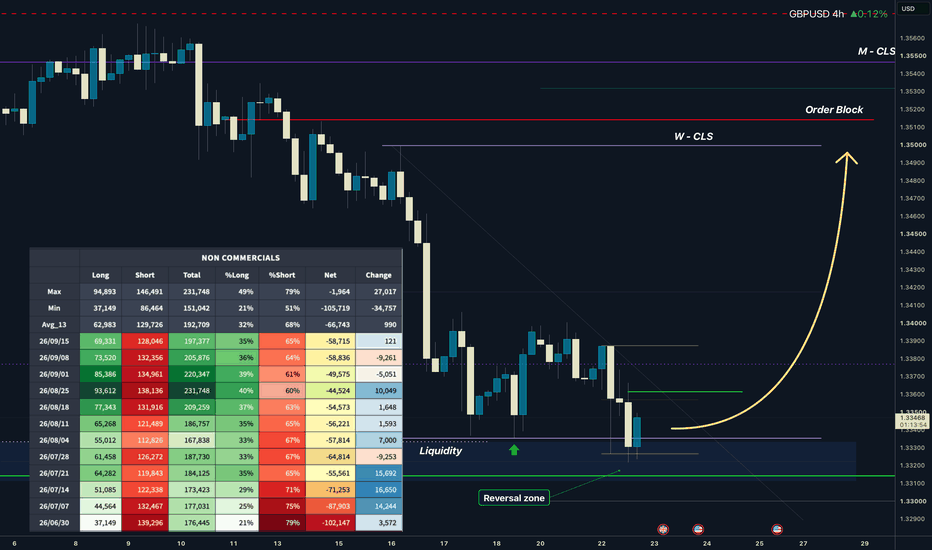
Unpacking the GBPUSD Reversal Setup
Professional trading is about identifying recurring patterns and executing on them with discipline. A recent chart analysis on GBPUSD provides a perfect case study of a high-timeframe (HTF) reversal setup. The goal wasn't to predict the future but to wait for a specific sequence of events to unfold, creating a high-probability trading opportunity. Let's break down the components.
Identifying the Core Structure: The CLS Range
The foundation of this trade idea was the creation of a new CLS Range on the 4-hour chart. Think of a range as a battlefield where buyers and sellers establish temporary boundaries. For traders using the CLS (Cycles, Levels, and Structures) method, defining this range is the critical first step. It provides the context for everything that follows.
This isn't just any random high and low; it's a specific structure that indicates a potential balancing of order flow before the next major price move.
The Key Ingredient: Manipulation Below the Lows
One of the most powerful concepts in modern price action trading is the idea of liquidity hunting or manipulation. Before a significant move up, large market participants often need to engineer liquidity by pushing the price below a key support level—in this case, the low of the newly formed CLS range.
As noted in the original idea, the price dipped into a Key Level below the range. This action achieves two things:
- Triggers Stop Losses: It stops out traders who went long inside the range, placing their stops just below the support.
- Induces Breakout Shorts: It encourages impatient traders to short the market, believing the support level has broken.
These actions provide the necessary liquidity for institutional players to build their long positions at more favorable prices. This 'manipulation phase' is a hallmark of the CLS Model 1 setup.
The Trigger: Waiting for Confirmation (CIOD)
Seeing the manipulation is only half the battle. Jumping in too early is a common mistake. Professional traders wait for confirmation that the manipulation is over and the true expansion phase is beginning.
In the context of the CLS strategy, this confirmation is called a CIOD (Change in Order Flow). This is a specific price action signal on a lower timeframe that shows a clear shift from bearish momentum (during the manipulation) to bullish momentum. It’s the market tipping its hand, showing that buyers have absorbed the selling pressure and are now in control.
The instruction was clear: “Stay patient and enter only after candle close.” This emphasizes that the CIOD isn't a guess; it's a confirmed event on the chart. This patient approach is something a dedicated trading coach instills, as it filters out many unnecessary losses.
Defining the Objective: The Target
Every trade needs a logical target. For this GBPUSD setup, the target was defined as 50% of the CLS range. This is not an arbitrary level. It represents the mean or equilibrium point of the range, a high-traffic area where price is likely to be drawn after a deviation below the lows.
This clear, pre-defined target removes emotion and guesswork from the trade management process, turning the trade into a systematic operation with a clear objective.
WRITTEN BY
David Perk
Full-time forex trader and mentor. $1M+ verified track record on FX Blue. Teaches the CLS strategy to funded traders — live, five times a week.
Want to trade this alongside David?
Join the community — livestreams 5× a week, trade breakdowns, and entries called in real time. Your first week is free, full access to every paid feature.
Join the community — first week freeNo experience needed. Cancel anytime.