Reading EURUSD with the CLS Strategy: A Deep Dive
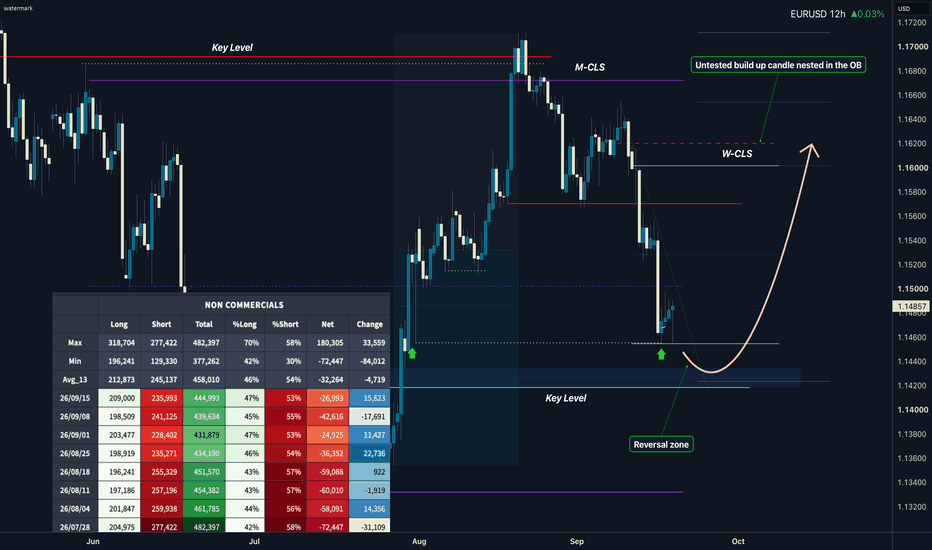
A Framework for Market Analysis
The forex market can often seem chaotic, but with a structured approach, clarity emerges. The CLS strategy provides traders with a repeatable model for interpreting price action. A recent analysis of the EURUSD chart offers a perfect, real-world example of how this strategy is applied, moving from a high-level context down to a specific trade idea.
This method isn't about signals or indicators in isolation. It's a comprehensive approach to reading the story the market is telling. For anyone looking to learn forex trading on a deeper level, understanding this process is invaluable.
Step 1: The CLS Range and Market Context
The analysis begins with the statement, "New CLS Range has been created." This is the foundational first step. The CLS (Consolidation-Liquidation-Sweep) Range defines the current trading environment. It's a specific area of consolidation that provides the context for the subsequent price action.
- Consolidation: Price moves sideways, building orders (liquidity) above its highs and below its lows.
- Significance: By identifying this range on a higher timeframe, like the one used for the EURUSD analysis, a trader establishes the primary playing field. The edges of this range become critical levels of interest.
Step 2: Anticipating the Manipulation
This is where the CLS strategy truly shines. The analysis states, "after the manipulation in to the Key Level, below the CLS range and reaction..." This describes a classic CLS model. Instead of trading within the range, the strategy anticipates a move outside the range to hunt for liquidity.
This "manipulation" or "liquidity sweep" is designed to:
- Trigger the stop losses of traders who went long inside the range.
- Induce breakout traders to enter short positions, believing the range has broken down.
By understanding this dynamic, which is a core part of our forex education, a CLS trader doesn't get trapped by this move. Instead, they see it as a prerequisite for a potential high-probability reversal. The "reaction" mentioned is the first clue that the liquidity grab may be complete and the market is ready to reverse.
Step 3: Confirmation with a Change in Order Flow (CIOD)
A potential setup is not a trigger to trade. Patience is critical. The analysis emphasizes the need to "see a confirmation switch from the manipulation phase - CIOD (change in order flow) in the the expansion."
- CIOD (Change in Order Flow): This is the final piece of the puzzle. After price sweeps liquidity and reacts, the trader looks for a clear shift in market structure on a lower timeframe. This typically involves price breaking a recent swing high, signaling that buying pressure is now overpowering selling pressure.
- From Manipulation to Expansion: The CIOD is the bridge between the manipulation phase and the expected "expansion" phase—the strong, directional move back across the CLS range. The targets mentioned (50% of the range and then the full range) are logical objectives for this expansion.
This three-step process—Range, Manipulation, Confirmation—transforms a confusing chart into a clear, actionable plan. It's a systematic approach taught within our trading course that helps traders move beyond guesswork and trade with intention.
WRITTEN BY
David Perk
Full-time forex trader and mentor. $1M+ verified track record on FX Blue. Teaches the CLS strategy to funded traders — live, five times a week.
Want to trade this alongside David?
Join the community — livestreams 5× a week, trade breakdowns, and entries called in real time. Your first week is free, full access to every paid feature.
Join the community — first week freeNo experience needed. Cancel anytime.