Deconstructing a CLS Strategy Trade Setup on USOIL
Reading the Market with the CLS Strategy
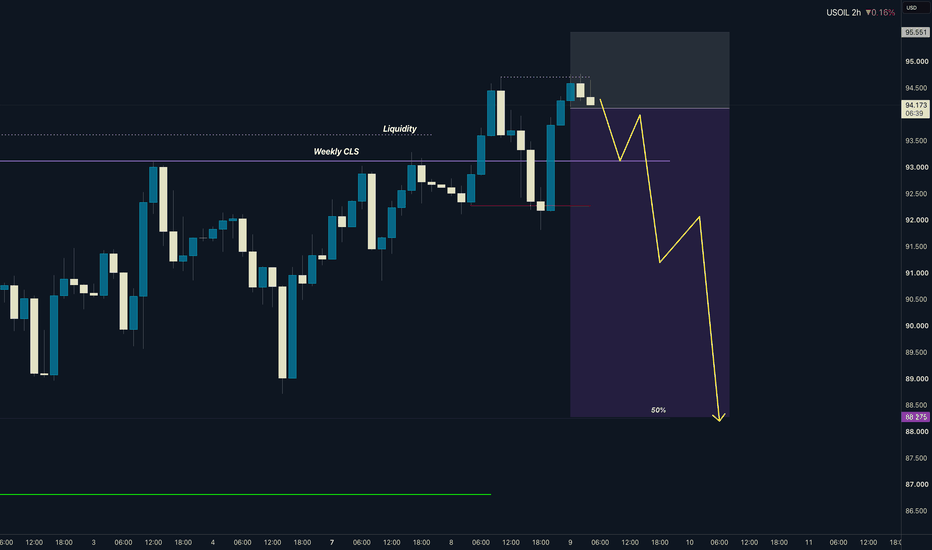
Many traders look at a chart and see chaos. With a structured approach like the CLS (Core Liquidity Structure) strategy, we can bring clarity to that chaos. A recent analysis I shared on TradingView for USOIL provides a perfect case study for our bearish "Model 1" setup. Let's break down the components of this trade idea to demonstrate how the CLS strategy helps us read the market's intentions.
This is not about predicting the future, but about understanding the current narrative of the chart and identifying high-probability turning points. Our forex academy is built on teaching this systematic way of thinking.
Step 1: Identifying the CLS Range
Everything starts with context. The first step in the analysis was identifying the newly created "CLS Range." This range represents a defined area of consolidation where buyers and sellers have been active. It gives us our structural boundaries—a high and a low—that frame our analysis. We view price action within this range as a battle for control, and our job is to wait for a clear winner to emerge.
Step 2: Anticipating the Manipulation
One of the core tenets of the CLS strategy is understanding that markets are engineered to hunt liquidity. Before a significant move, price will often make a false run in the opposite direction to trip stop losses and lure in unsuspecting traders.
In the USOIL setup, the plan anticipates a manipulation into a Key Level below the established CLS range. This move is designed to make traders believe the price is breaking down, encouraging them to sell at the worst possible time. We, however, see this not as a breakout but as a potential liquidity grab—a necessary precursor to the real move.
Step 3: Waiting for Confirmation (CIOD)
This is the most crucial step and where patience pays off. After the manipulation, we don't just jump into a trade. We need to see a clear "Change in Order Flow" (CIOD). This is our confirmation that the manipulation phase is over and the expansion phase—the strong, directional move we want to capture—is beginning.
The CIOD is a specific structural shift on a lower timeframe that signals institutional intent has changed from seeking liquidity to distributing positions. For the USOIL short idea, we would need to see this confirmation switch after the manipulation to validate the bearish bias. Entering only after a candle close that confirms this shift is a key rule for disciplined execution.
Step 4: Defining the Target
Once the setup is confirmed, the target is not arbitrary. The plan aims for the 50% level of the broader CLS range. This is a logical area of equilibrium where price is likely to draw back to. It provides a clear, objective take-profit level that prevents us from getting greedy and giving back profits.
For anyone looking to learn forex trading, this structured, step-by-step process is invaluable. It transforms trading from a guessing game into a methodical practice, which is the focus of our comprehensive trading course.
WRITTEN BY
David Perk
Full-time forex trader and mentor. $1M+ verified track record on FX Blue. Teaches the CLS strategy to funded traders — live, five times a week.
Want to trade this alongside David?
Join the community — livestreams 5× a week, trade breakdowns, and entries called in real time. Your first week is free, full access to every paid feature.
Join the community — first week freeNo experience needed. Cancel anytime.