CLS Strategy Explained: A GBPUSD Reversal Case Study
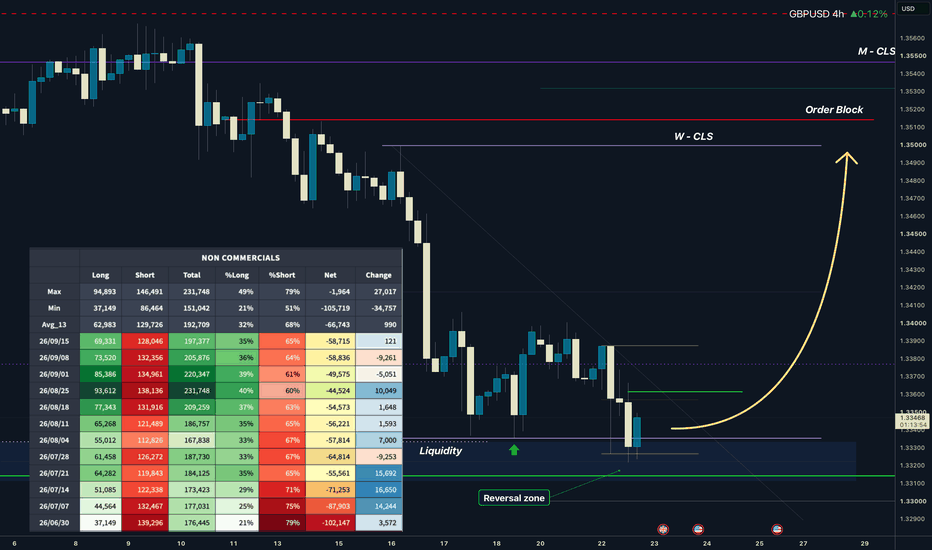
Deconstructing Price Action with the CLS Strategy
The CLS (Cycles, Levels, Structures) strategy is a comprehensive framework for reading price action. It’s not a black-box system but a logical way of interpreting market behavior. To understand how it works in practice, let's use a recent GBPUSD trade analysis—a "CLS Model 1 - HTF Reversal"—as a live case study.
S for Structures: The CLS Range
Everything in this trade idea begins with a structure. The analysis notes, "New CLS Range has been created." In the CLS methodology, a Structure like a range provides the immediate context for trading. It's a period of relative balance or consolidation between buyers and sellers, defined by a clear high and low.
- What it is: A clear support and resistance boundary formed by recent price action.
- Why it matters: It acts as a map. Price is either inside the range (rotation) or outside the range (expansion/manipulation). By defining this structure first, a trader knows exactly what they are looking for and where.
L for Levels: The Key Level and Liquidity
Once the structure is defined, we look at key Levels. The analysis states the plan was to watch for "manipulation in to the Key Level, below the CLS range." This highlights a core CLS principle: significant moves often begin after a raid on liquidity resting at predictable levels.
- The Level: The low of the CLS range is a key level where traders place sell stops (if they are long) and where breakout sellers will place sell orders.
- The Logic: Before initiating a large move up, institutional algorithms may push price below this level to trigger those stops and sell orders. This creates a pool of liquidity they can buy into at a better price. The CLS strategy anticipates this common market behavior rather than being a victim of it.
C for Cycles: Manipulation to Expansion
The market moves in Cycles or phases. The CLS strategy simplifies this into a few key phases. The GBPUSD analysis perfectly illustrates the two most important ones for this setup:
- The Manipulation Phase: This is the move below the range low. The goal of the trader is to observe this phase, not participate in it. It is designed to trap weaker market participants.
- The Expansion Phase: This is the real, intended move. The entire goal of the CLS Model 1 setup is to enter at the very beginning of this expansion phase.
The Confirmation: Change in Order Flow (CIOD)
How do we know the manipulation phase is over and the expansion is beginning? This is the most crucial piece of the puzzle, and the CLS strategy has a specific confirmation signal: the CIOD (Change in Order Flow).
As the analysis states, "we need to see a confirmation switch from the manipulation phase - CIOD... in to the expansion." A CIOD is a specific price action pattern that shows momentum has definitively shifted from bearish to bullish on the execution timeframe. It's the market's way of confirming that the buyers who stepped in during the manipulation are now in control.
This requirement to wait for a CIOD is what separates this disciplined approach from simply guessing at a bottom. It's a rules-based entry trigger that is core to the CLS strategy. This level of detail is something you would explore deeply in a professional trading course.
By combining these elements—Structure, Levels, and Cycles, confirmed by a CIOD—the CLS strategy provides a robust, logical, and repeatable way to engage with the market. It moves a trader from simply reacting to price to understanding the story that price is telling.
WRITTEN BY
David Perk
Full-time forex trader and mentor. $1M+ verified track record on FX Blue. Teaches the CLS strategy to funded traders — live, five times a week.
Want to trade this alongside David?
Join the community — livestreams 5× a week, trade breakdowns, and entries called in real time. Your first week is free, full access to every paid feature.
Join the community — first week freeNo experience needed. Cancel anytime.