AUDUSD Analysis: A CLS Strategy Short Setup Breakdown
Deconstructing a High-Probability AUDUSD Setup
In the world of forex trading, clarity is king. A well-defined strategy allows a trader to cut through the noise and focus on what truly matters. Recently, I shared a potential short setup on AUDUSD that perfectly illustrates the logic behind my proprietary CLS (Cycle, Liquidity, Structure) Strategy. Let's break down the components of this trade idea to understand why it presented a compelling opportunity.
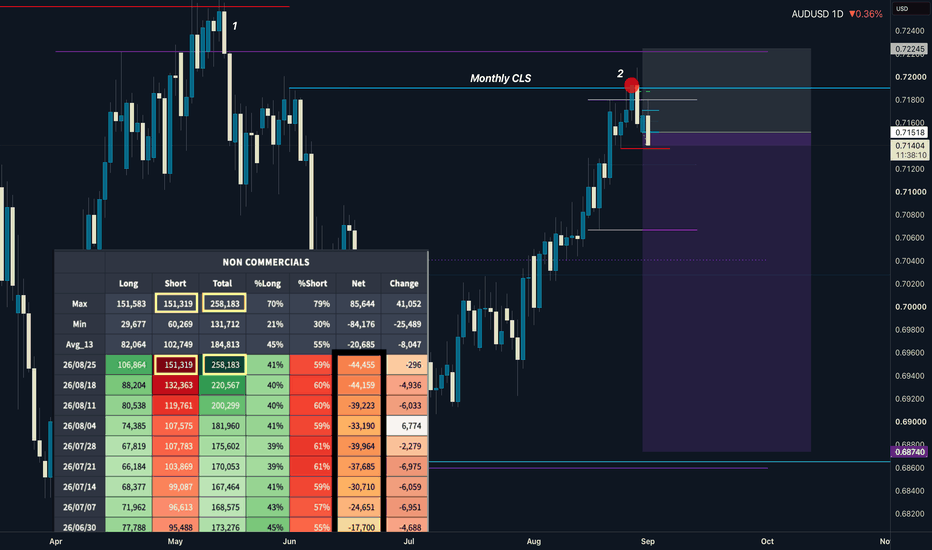
This analysis, based on the daily timeframe, combined several powerful confluences, starting with a significant macro-level insight: the Commitment of Traders (COT) report showed institutional positioning at its biggest short level in five years. This provides a strong directional bias, suggesting that large market participants are anticipating a decline in the Australian Dollar against the US Dollar.
Key Elements of the CLS Setup
At its core, the setup revolved around a newly formed CLS Range. This range defines the current boundaries of price action, giving us a clear area to monitor for opportunities.
Here’s what the chart showed:
- The CLS Range: A new range was established, providing a framework for the trade. The upper boundary of this range acts as a key level of resistance.
- Manipulation Above the High: The core of this setup is the concept of a liquidity hunt. Price pushed above the established range high, into a key resistance level. This move is designed to trigger breakout traders' buy stops and entice early buyers, only to reverse. This is what we call the manipulation phase.
- Reaction at the Key Level: After the manipulation, the price showed a clear rejection from the key level. This reaction is the first sign that sellers are stepping in and that the upward move was false.
The Confirmation: Waiting for CIOD
Identifying the manipulation is only half the battle. A professional trader waits for confirmation before entering. In the CLS Strategy, this confirmation comes in the form of a CIOD (Change in Order Flow). This is a specific price action pattern that signals a definitive shift from the manipulation phase to the expansion (or trend) phase. It confirms that sellers have taken control from buyers.
As I noted in the original TradingView idea, the plan was to wait for this confirmation switch before considering an entry. This patient approach is a cornerstone of consistent trading and is a key part of the forex education I provide.
The Target and Trade Logic
Once the CIOD confirms the bearish bias, the trade becomes active. The logical target for this type of setup is the 50% equilibrium point of the CLS range. Why? Because markets often revert to the mean after a liquidity hunt. This provides a high-probability target that doesn't require predicting the absolute low.
This AUDUSD setup is a textbook example of how a structured approach can bring order to the chaos of the markets. By combining macro sentiment (COT data) with a precise price action model (CLS), we can build a robust case for a trade. As a forex mentor, my goal is to teach traders to see the market through this clear, logical lens.
WRITTEN BY
David Perk
Full-time forex trader and mentor. $1M+ verified track record on FX Blue. Teaches the CLS strategy to funded traders — live, five times a week.
Want to trade this alongside David?
Join the community — livestreams 5× a week, trade breakdowns, and entries called in real time. Your first week is free, full access to every paid feature.
Join the community — first week freeNo experience needed. Cancel anytime.